
Why you need a multi-channel campaign
Multichannel marketing is not new. Since the beginning, marketers have been communicating with consumers across a variety of channels, and reaching their target markets by selecting the appropriate combination of media.
However, the number of available platforms has grown exponentially in recent years, making marketers’ jobs that much more complicated. Another new development, a result of the rapid growth and consumer use of digital media is that it’s now possible to get an almost immediate response from your audience.
With all the new consumer touch points, it can be very difficult to keep your audience’s attention. Consumers are now multi-media users whose ability to multi-task is growing. Making sure you are as good at multi-channel surfing as they are is one of the biggest challenges – and one of the surest ways to success – for modern marketers.
What we have today is a buyer’s market. With the increase in media channels, consumers now have a lot more choice – in how they buy, and how they are communicated to. With this in mind, brands need to keep up by making available as many touch points as possible. Your brand must be visible, but it must also give people a choice of how they can interact with that brand.
Having a multi-channel strategy is a must, because if you only have a single-channel strategy you run the risk of completely missing your target audience. You want your target market to receive your message at different stages in their buying cycle and at various times of the day, and the only way to do this is with a multi-channel strategy that allows you to re-enforce the same brand message – thus re-enforcing the brand.
In creating your multi-channel campaign, you will need to look at the different potentialities of each media channel. Radio, for example, has the capability to engage the listener in an atmosphere of trust, because of DJs who have spent a lot of time cultivating a trustworthy persona on air. On the other hand, social media has an unmatched amplifying effect and unprecedented consumer interaction mechanism.
If you’re savvy, you will put the individual strategies you’ve created for these very different media together, so they work for a common, combined effect. For example, you could combine a radio advertisement with a digital call to action. A multi-channel strategy such as this often yields multiple returns, as studies show that 78% of people who hear such an advertisement engage in digital activity with the brand within 24 hours after hearing it.
For best results, you’ll need to do the following when going the multi-channel route:
- Get an understanding of the media you’ll be using, and which platforms will work harmoniously togethe
- Make sure your objective is clearly determined and defined
- Get to know your target market – which media channels they use and the ways in which they use these media channels
- Tailor each message to fit its media type, while remaining consistent in your messaging
- Measure and learn – this is crucial, so that you can make the next campaign even better.
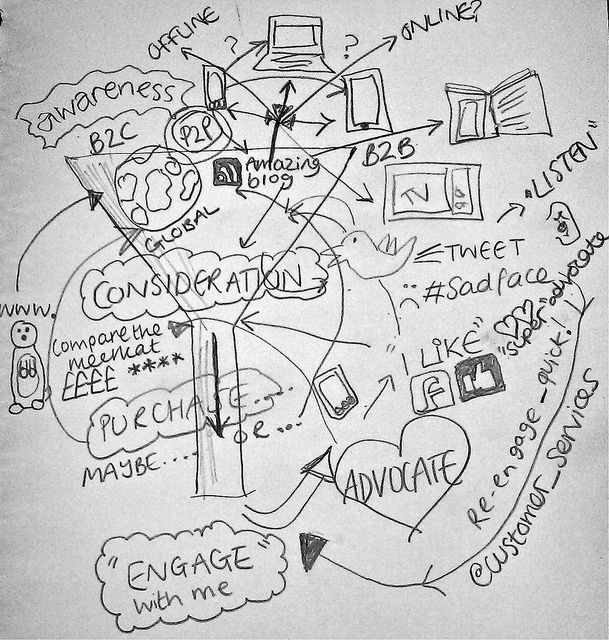
Have multiple marketing channels to best reach your target market.